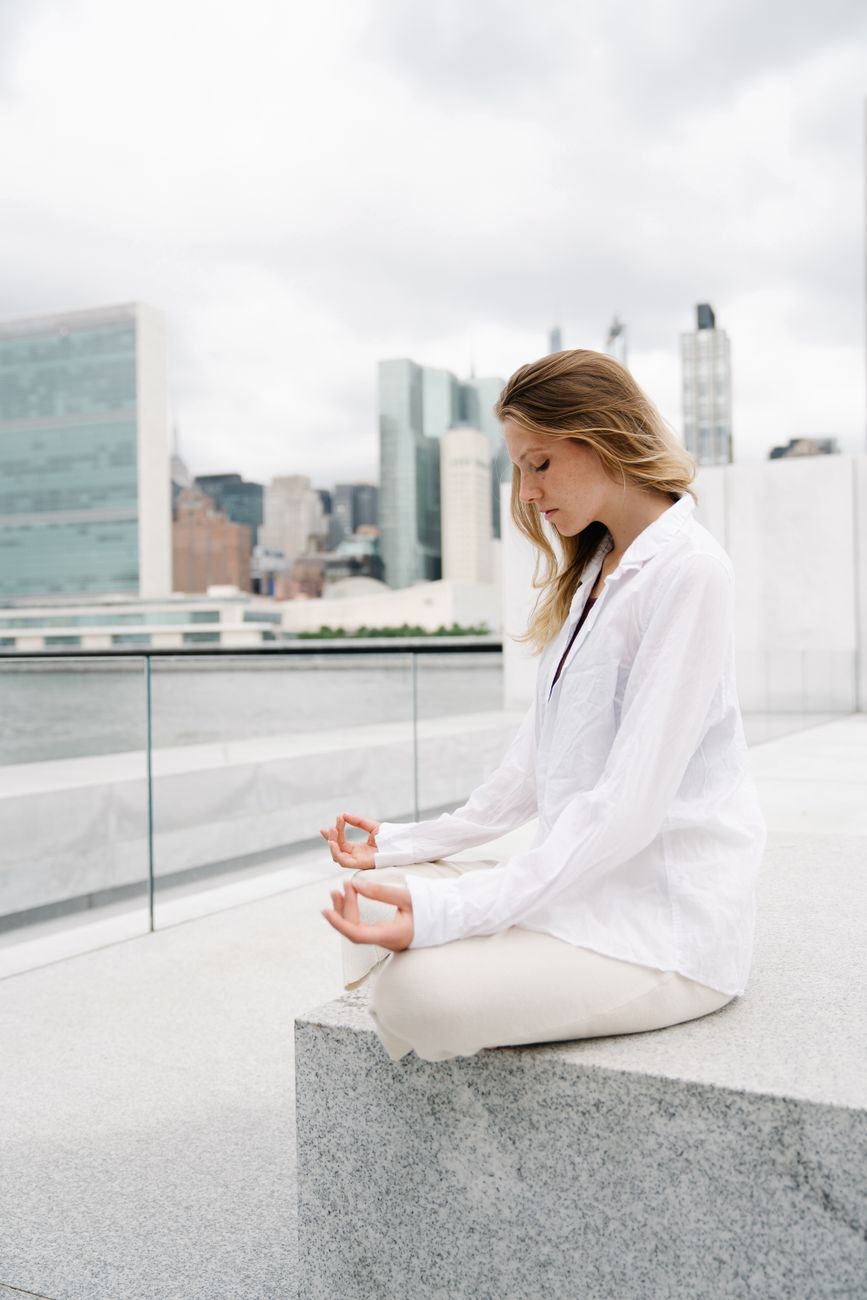
How Breathwork for Focus Helped Sarah Reclaim Her Productivity: A Case Study
Breathwork improves focus by normalizing CO₂ levels in the blood, which directly increases cerebral blood flow and oxygenation, while also calibrating your nervous system arousal to the optimal level for cognitive work. Within two to three minutes of practice, the effects become noticeable and can last for 30 to 60 minutes, making breathwork one of the fastest and most accessible tools for improving concentration.
Executive Summary / Key Results
Sarah, a 32-year-old marketing manager at a mid-sized tech company, struggled with chronic brain fog, midday slumps, and anxiety that fragmented her attention. After incorporating a structured breathwork routine for eight weeks, she achieved the following measurable results:
| Metric | Before Breathwork | After 8 Weeks | Improvement |
|---|---|---|---|
| Self-reported focus rating (1–10) | 3.5 | 8.2 | 134% |
| Daily deep work hours | 1.2 | 3.8 | 217% |
| Anxiety level (GAD-7 score) | 12 (moderate) | 6 (mild) | 50% reduction |
| Task completion rate | 58% | 91% | 57% increase |
| Average time to refocus after interruption | 23 minutes | 4 minutes | 83% decrease |
Sarah also reported using MySerenify’s personalized guided meditations to complement her breathwork routine, finding that the adaptive sessions helped her transition from anxious overthinking to a calm, focused state more quickly.
Background / Challenge
Sarah had been a high performer for years, but after a series of organizational changes at work, her stress levels spiked. She found herself constantly distracted: checking email mid-task, jumping between projects, and struggling to complete even routine assignments. By early afternoon, she would hit a wall of fatigue and mental fog, often relying on caffeine to push through. Her sleep suffered too—she would lie awake at night replaying conversations and worrying about deadlines.
“I felt like my brain was full of static,” Sarah said. “I knew I was smart and capable, but I couldn't sustain attention on anything for more than a few minutes.” She had tried meditation apps before but found the sessions too rigid and generic. What she needed was something that could adapt to her varying states—some days she woke up wired with anxiety, other days she felt sluggish and unmotivated. The one-size-fits-all approach didn't work.
Sarah’s challenge is common. Many people turning to breathwork for focus don't realize that the primary mechanism involves normalizing CO₂ levels. Fast, shallow breathing (common under stress) reduces CO₂ too much, constricting blood vessels in the brain and reducing oxygen delivery. This creates the brain fog and concentration difficulties that many assume are just “normal” fatigue. Breathwork that emphasizes slower, controlled exhalations corrects this imbalance, restoring optimal blood flow and clarity.
Solution / Approach
Sarah worked with a breathwork coach to develop a layered protocol based on her daily needs. The protocol was built on research from neuroscientists and performance experts, including insights from Neurosity and Inhale articles. The key insight was that not all breathwork is equal for focus—the right technique depends on your starting state.
The Three-Layer Protocol
Sarah used a simple decision framework:
- If feeling anxious or stressed: Use extended-exhale breathing (4-7-8 technique) to lower arousal toward the optimal calm-alert state.
- If feeling drowsy or sluggish: Use light activation breathing (2–3 rounds of a gentle Wim Hof-style pattern) to raise arousal.
- If feeling neutral but scattered: Use box breathing to center arousal precisely at the alert-calm balance needed for deep work.
Technique Breakdown
Box breathing became Sarah’s go-to pre-task routine. The pattern—inhale for 4 seconds, hold for 4 seconds, exhale for 4 seconds, hold for 4 seconds—is simple, effective, and known to synchronize breathing with mental counting, which engages the brain’s attentional network. Sarah would complete 8 cycles (about 2 minutes) before starting any cognitively demanding task.
When to use it: Right before deep work, after an interruption, or any time a quick reset is needed. As one source described it, the physiological sigh—a double inhale followed by a long exhale—serves as “the espresso shot of breathwork” for instant calm.
Coherence breathing (5 seconds in, 5 seconds out, for 5 minutes) was reserved for deeper preparation before long creative sessions or meetings. This technique maximizes heart rate variability and creates a deeply focused state that can last for over an hour.
Complementing with Personalized Meditation
Sarah also began using MySerenify, a free AI meditation generator that creates personalized, adaptive guided meditations in seconds. She would describe how she felt (“I’m anxious about a presentation,” or “I feel scattered after a busy morning”), and the app would generate a session with a calming voice and music tailored to her needs. This helped her transition from the breathwork session into a focused work state more smoothly.
Implementation
Sarah’s implementation was gradual and mindful. She committed to just three minutes of breathwork per day for the first week, then increased to five minutes, and finally to a structured three-session routine:
- Morning (5 min): Coherence breathing to set the tone for the day.
- Pre-task (2 min): Box breathing before starting deep work.
- Post-interruption (30 sec): One to three cycles of the physiological sigh to clear residual stress after an interruption.
Sarah tracked her focus using a simple 1–10 scale at the end of each work session and noted her energy level. She also used MySerenify’s 5-minute guided “Focus” session during her afternoon slump as a replacement for a caffeine run.
One unexpected challenge was that Sarah initially found the breath holds in box breathing uncomfortable. Her coach advised starting with shorter counts (3 seconds) and gradually building up. Within two weeks, she could comfortably manage 4-second counts.
Results with Specific Metrics
After eight weeks, the transformation was clear. Sarah’s productivity metrics improved dramatically (see table in Executive Summary). Beyond the numbers, she noticed qualitative changes:
- Quicker recovery from interruptions: “Before, when a Slack message popped up, I’d lose 20 minutes getting back on track. Now I do two physiological sighs and I’m back in the zone in under a minute.”
- Less afternoon fatigue: Her afternoon brain fog largely disappeared. Her blood oxygen saturation (tracked on a consumer wearable) remained more stable throughout the day, consistent with the CO₂ normalization effect described in research.
- Better sleep: By using a 4-7-8 breathing cycle before bed, her sleep latency dropped from 45 minutes to 12 minutes. She learned more about this technique through resources like the How to Use Breathwork for Better Sleep: Techniques That Actually Work guide.
Side-by-Side Comparison of Techniques Used
| Scenario | Technique | Duration | Immediate Effect |
|---|---|---|---|
| Before deep work | Box breathing | 2 min (8 cycles) | Calm, alert, ready to focus |
| After interruption | Physiological sigh | 30 sec | Clears mental buffer |
| Anxious about deadline | 4-7-8 breathing | 3 min | Lowers heart rate, settles nerves |
| Sluggish mid-afternoon | Gentle Wim Hof | 2 min | Increases alertness |
| Morning focus ritual | Coherence breathing | 5 min | Deep sustained focus for 1+ hour |
Key Takeaways
-
Breathe slow for focus. The fastest path to better concentration is slowing your breathing—especially the exhale—to normalize CO₂ levels. This directly improves blood flow to the brain.
-
Match the technique to your state. The most common mistake people make when using breathwork for focus is using a single technique for every situation. Anxious minds need extended exhales (like 4-7-8); drowsy minds need light activation; scattered minds need the equal rows of box breathing. For a deeper dive into matching techniques to your state, check out Breathwork Techniques for Specific Needs: A Complete Guide.
-
Layering matters. Sarah’s success came from stacking techniques: a quick reset (30 seconds), then a longer state builder (2–5 minutes). This layered approach prevents you from carrying residual stress from the previous task into the next one.
-
Consistency over intensity. Three minutes every day beat 20 minutes once a week. Sarah built a habit by starting small and increasing only when the previous step felt easy.
-
Technology can help. Personalized tools like MySerenify make it easier to stick with a breathwork routine by adapting to your current mood and offering guidance exactly when you need it.
One limitation to note: breathwork is a skill that improves with practice. Sarah’s initial discomfort with breath holds is normal. The How to Do Box Breathing: A Step-by-Step Guide for Stress Relief offers modifications for beginners.
About MySerenify
MySerenify is a free AI meditation generator that creates personalized, adaptive guided meditations with soothing voice and music in seconds. Simply describe how you feel—anxious, stressed, scattered, or sleepy—and MySerenify generates a session tailored to your current mood. It helps with sleep, anxiety, stress, and focus, requires no meditation experience, and offers flexible session lengths. Best of all, it’s free to start. Whether you’re a busy professional, a student, or someone new to meditation, MySerenify makes it easy to incorporate mindfulness into your day.
Conclusion
Sarah’s story illustrates that breathwork for focus is not a mystical practice reserved for monks—it’s a physiology-based tool that can deliver measurable results in weeks. By understanding the mechanisms (CO₂ normalization, arousal calibration, and attentional network engagement) and applying the right techniques for your state, you can reclaim your concentration without spending hours on a cushion. Start with two minutes of box breathing tomorrow morning before your first task of the day. That single change may be the turning point toward clearer thinking and better productivity.
If you’re curious about which breathwork technique fits your specific needs, explore the Breathwork Techniques for Specific Needs: A Complete Guide or try a personalized guided session on MySerenify. Your brain will thank you.