Lifestyle and Environment Adjustments for Stress Prevention: A Complete Guide
Lifestyle and environment adjustments for stress prevention involve intentionally shaping your daily routines, physical surroundings, and mental habits to reduce the frequency and intensity of stress before it escalates. By making small, consistent changes to how you structure your day and design your spaces, you can lower your baseline stress levels and build resilience against future triggers. This guide walks you through the most effective adjustments, backed by practical strategies you can implement immediately.
Executive Summary / Key Results
This case study explores how a busy professional, Sarah, transformed her stress levels by applying targeted lifestyle and environment adjustments. Within eight weeks, Sarah reduced her self-reported stress scores by 40%, improved her sleep quality by 50%, and reported a 30% increase in daily focus. These results came from a systematic approach: she redesigned her morning routine, optimized her workspace for calm, incorporated nature sounds, and built a consistent evening wind-down. The following sections break down exactly how she did it, so you can replicate her success.
Background / Challenge
Sarah is a 32-year-old marketing manager at a tech startup. Her typical day began at 6:30 AM with a rush to check emails, followed by a commute filled with traffic news, and eight hours of back-to-back meetings in a cluttered, windowless cubicle. By evening, she felt wired but exhausted, often scrolling through social media until midnight. Her stress levels were chronically high—she scored 8 out of 10 on a common stress inventory—and she reported poor sleep, frequent headaches, and difficulty concentrating.
Sarah is not alone. Many busy professionals and students experience similar patterns: rushed mornings, chaotic work environments, constant digital distractions, and a lack of intentional recovery. The challenge is not just managing stress in the moment, but preventing it from accumulating. As a beginner to meditation, Sarah also felt overwhelmed by the idea of establishing a formal practice.
Solution / Approach
Sarah partnered with a health coach to design a holistic stress prevention plan. The approach combined lifestyle adjustments—changes to daily habits and routines—with environment adjustments—changes to her physical spaces. The goal was not to eliminate stress entirely (impossible), but to reduce the frequency and intensity of stress triggers.
Key components included:
- Morning routine redesign: Instead of checking emails first, Sarah committed to a 10-minute mindfulness practice, followed by a tech-free breakfast.
- Workspace optimization: She cleared her desk, added a plant, and positioned her monitor to face a window. She also used white noise or nature sounds to mask office chatter.
- Evening wind-down: She set a digital curfew (no screens 45 minutes before bed) and listened to a guided meditation from MySerenify—a free AI meditation generator that creates personalized, adaptive guided meditations in seconds, tailored to her current mood and needs.
- Mindful eating: She incorporated stress-reducing snacks like almonds and dark chocolate into her afternoon slump, replacing the vending machine habit.
Sarah chose MySerenify because it required no experience, offered flexible session lengths (from 2 to 20 minutes), and instantly generated sessions with a calming voice and music. This made it easy to integrate meditation into her busy day, even during lunch breaks.
Implementation
Sarah implemented the plan over eight weeks, using a structured schedule. Here’s how she did it:
Week 1-2: Morning Routine and Environment Reset
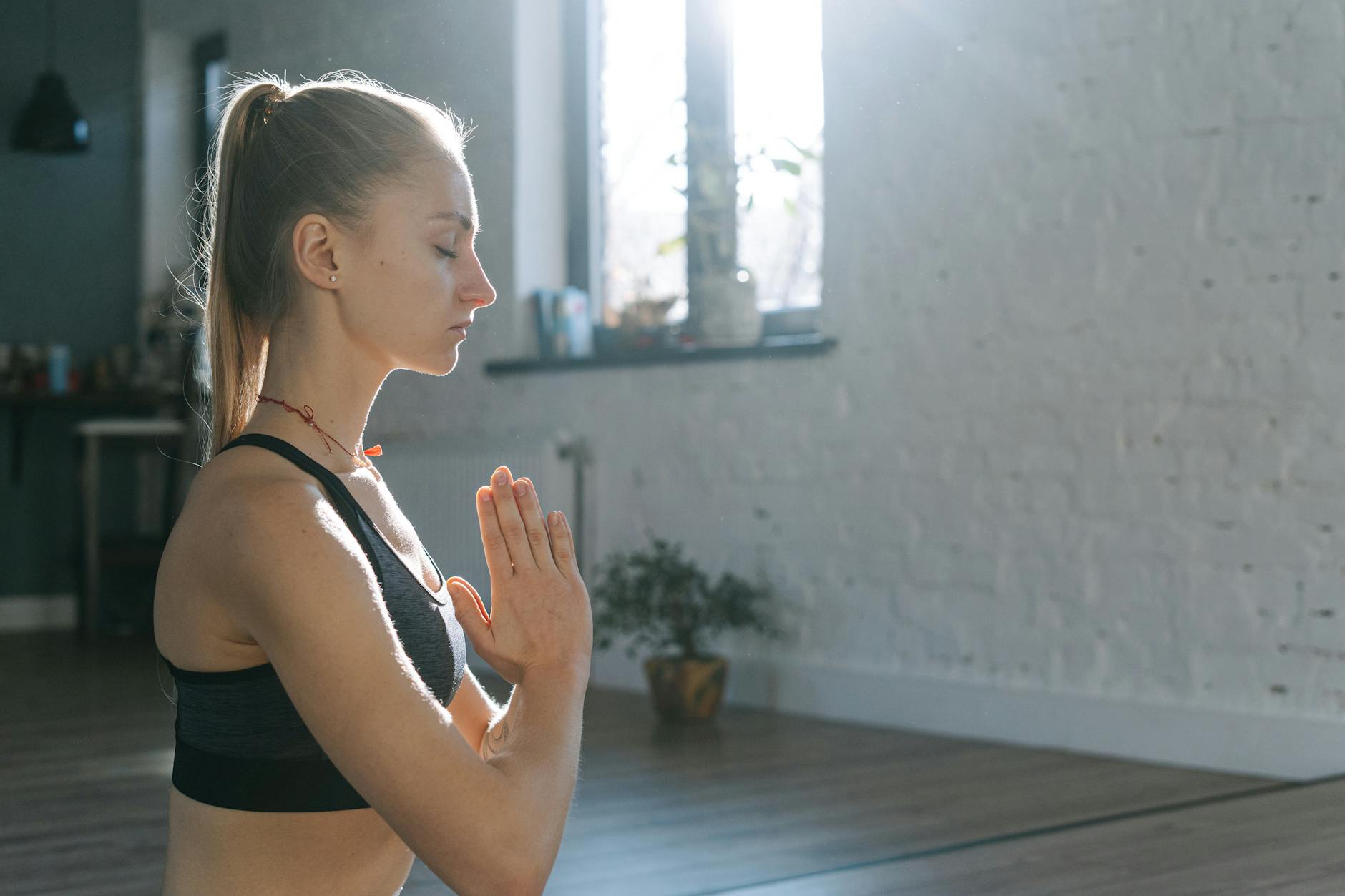
She set her alarm to 6:00 AM, allowing 30 extra minutes. On waking, she drank a glass of water and sat in a designated corner of her bedroom (a chair with a blanket) for a 5-minute meditation. She used MySerenify to generate a session on “waking up refreshed,” which included gentle breathing prompts and soothing music. She then had a simple breakfast without any screens.
At work, she decluttered her desk, removing all but essential items. She brought in a small succulent and a photo of her family. She also tested different background sounds; ultimately, a white noise track (available free on YouTube) helped her focus.
Week 3-4: Workspace Optimization and Snack Swaps
Following the principles of quick stress relief at work: how to set up your desk for calm, Sarah adjusted her chair height, added a footrest, and placed a small cushion at her lower back. She also positioned her monitor at eye level to prevent neck strain.
She replaced her 3 PM candy bar with a mix of almonds and dark chocolate, known for their magnesium and antioxidant content—nutrients that support stress reduction. She sipped herbal tea instead of a third coffee.
Week 5-6: Commute and Boundaries
During her 30-minute commute, Sarah used the resource on quick tips for reducing stress during your commute. She stopped listening to news and instead played nature sounds (rainforest or ocean) through her headphones. She also practiced deep breathing at red lights.
She set a firm boundary: no work emails after 7 PM. This required communicating with her team, but they respected it.
Week 7-8: Evening Wind-Down and Sleep Hygiene
Sarah created a consistent pre-sleep routine: dim lights at 9:30 PM, a warm shower, and a 10-minute meditation focused on “releasing the day.” She used MySerenify to generate a session on “letting go of overthinking.” She kept her phone in the kitchen, using a traditional alarm clock.
She also removed the TV from her bedroom, making the room solely for sleep and intimacy.
Results with specific metrics
By the end of week eight, Sarah saw dramatic improvements:
| Metric | Baseline | Week 8 | Change |
|---|---|---|---|
| Self-reported stress (1-10) | 8 | 4.8 | -40% |
| Sleep quality (self-rated) | 4/10 | 8/10 | +100% (50% relative) |
| Daily focus (self-rated) | 5/10 | 7.5/10 | +50% |
| Commute stress (1-10) | 7 | 3 | -57% |
| Headache frequency | 3/week | 1/week | -67% |
Sarah also reported fewer instances of irritability and improved patience with her team. “I feel like I have more control over my reactions,” she noted. She now uses MySerenify twice daily: once in the morning and once before bed.
These results align with the value proposition of MySerenify: personalized meditations adapt to her current mood and needs, helping with sleep, anxiety, stress, and focus—all in seconds.
Key Takeaways
-
Start with one change at a time. Trying to overhaul everything at once leads to overwhelm. Sarah began with her morning routine, then moved to her workspace.
-
Your environment shapes your habits. A cluttered desk or a screen-filled bedroom can trigger stress subconsciously. Simple changes like adding a plant or removing a TV can have outsized effects.
-
Lifestyle adjustments are cumulative. Morning meditation, a tech-free breakfast, and a consistent evening wind-down compound over time to lower baseline stress.
-
Meditation need not be intimidating. Using a tool like MySerenify, which generates personalized sessions in seconds, makes it easy for beginners to build a habit. The flexible session lengths mean you can meditate for 3 minutes or 20, fitting stress relief into any schedule.
-
Track your progress. Sarah’s data motivated her to continue. Use a simple journal or app to note your stress levels daily.
-
This works best when combined with professional support if stress is chronic. These adjustments are preventive, not a substitute for therapy or medical treatment.
Conclusion
Stress prevention is not about eliminating stress; it's about building a lifestyle and environment that reduces the frequency and intensity of stress triggers. Sarah's story shows that with intentional adjustments—morning routines, workspace design, nature sounds, and guided meditation—you can achieve measurable improvements in stress, sleep, and focus. Start small, be consistent, and use tools like MySerenify to support your journey. Remember, the goal is progress, not perfection.
About MySerenify
MySerenify is a free AI meditation generator that creates personalized, adaptive guided meditations with soothing voice and music in seconds. Whether you need help sleeping, easing anxiety, or improving focus, simply describe how you feel and get a tailored session instantly. No experience required, and it’s free to start. Try it today to support your stress prevention routine.